On September 19, the 2026 Tsinghua PBCSF Chief Economists Forum was successfully held.
The Forum brought together more than 20 renowned economists and chief economists from leading research institutions, focusing on the theme of “Global Rebalancing and Re�Architecturing of the International Monetary System.”
Discussions centered on four subtopics: macroeconomic policies and global rebalancing, the Chinese economy and global rebalancing, the re-architecturing of the international monetary system and global rebalancing, and domestic rebalancing and global rebalancing.
Participants offered forward-looking analyses of the Chinese and global economies, providing new ideas and policy recommendations for China’s high-quality economic development and its efforts to build a strong financial sector.
The Forum was hosted by the Tsinghua University PBC School of Finance (Tsinghua PBCSF) and organized by the Center for International Finance and Economics Research (CIFER), held in person and livestreamed across online platforms.
Opening Ceremony
At the opening ceremony, Peng Gang, Vice President of Tsinghua University, and Li Jinliang, Party Secretary of Tsinghua PBCSF, attended the Forum and delivered opening remarks.
Peng Gang noted that the world is undergoing profound changes unseen in a century at an accelerating pace, while a new round of technological revolution and industrial transformation is rapidly advancing and bringing profound changes to the international political and economic landscape.
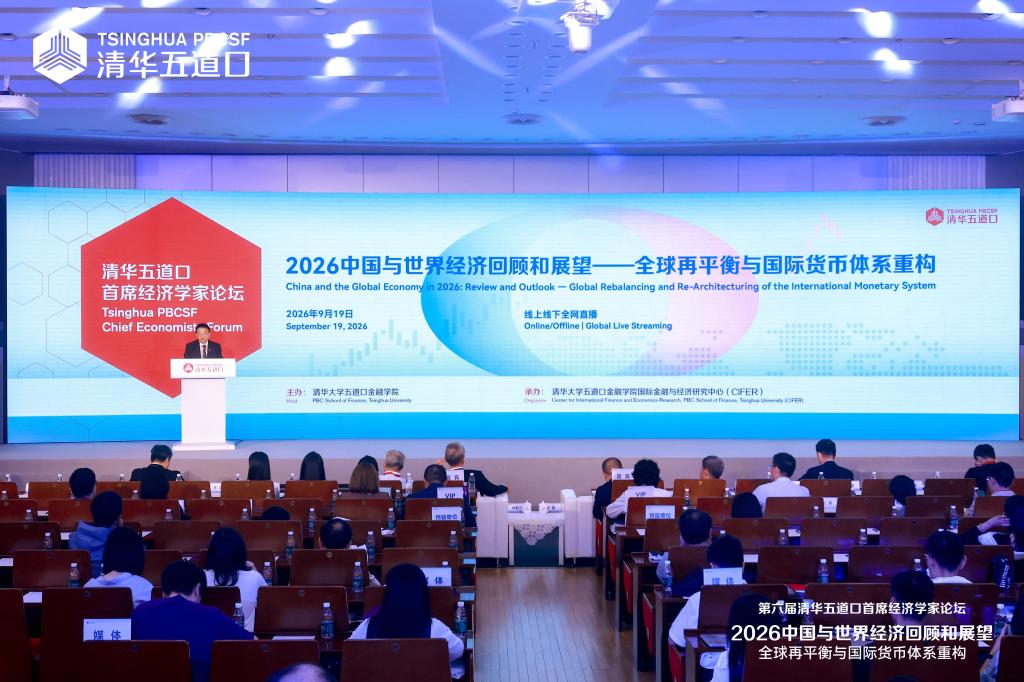
Against this backdrop, global economic rebalancing and the restructuring of international financial governance have become major issues bearing on the future development of both China and the world.
Looking ahead to the period of China’s 15th Five-Year Plan, Tsinghua University will remain committed to serving national strategies and contributing to China’s efforts to build strength in finance, science and technology, and manufacturing.
The University will further integrate academic research with the country’s high-quality development priorities, translating its strengths in research and talent more effectively into tangible outcomes that serve national strategies.
Peng expressed the hope that participating experts would conduct in-depth assessments of global economic and financial developments, strengthen academic exchange and intellectual dialogue, and contribute valuable theoretical insights and policy recommendations to addressing major questions facing China and the world.
Li Jinliang noted that the deep integration of artificial intelligence and finance is fundamentally reshaping the way the financial system operates.
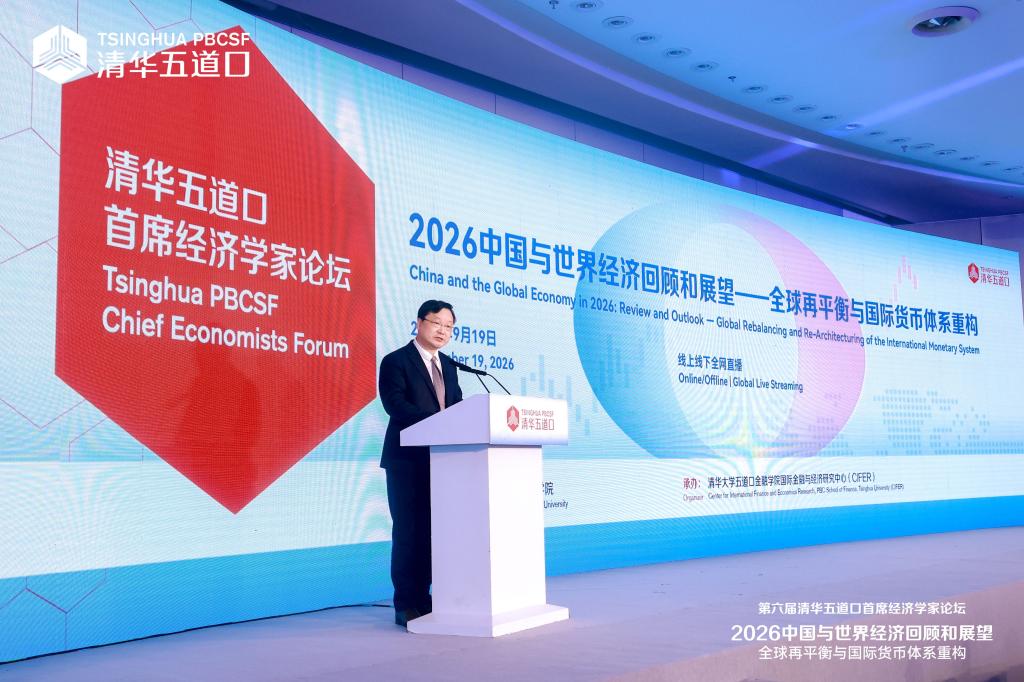
Financial institutions are moving from the digitalization of processes toward intelligent decision-making, while the boundaries between the financial and technology industries are becoming increasingly blurred.
Meanwhile, the diversification of reserve currencies and changes in cross-border payment systems are accelerating, making financial security, resilience, and greater autonomy and control increasingly important.
With its focus on “Global Rebalancing and Re�Architecturing of the International Monetary System,” this year’s Forum aims to provide an in-depth assessment of global economic and financial trends and contribute ideas to the steady advancement of RMB internationalization and the development of a more autonomous and controllable cross-border payment system.
Keynote Speech
During the keynote session hosted by the organizer CIFER, Ju Jiandong, Unigroup Chair Professor at Tsinghua PBCSF and Director of the Center for International Finance and Economic Research (CIFER), delivered a speech titled “Achieving a Triple Rebalancing of the Chinese Economy through the Internationalization of RMB-Denominated Government Bonds.”
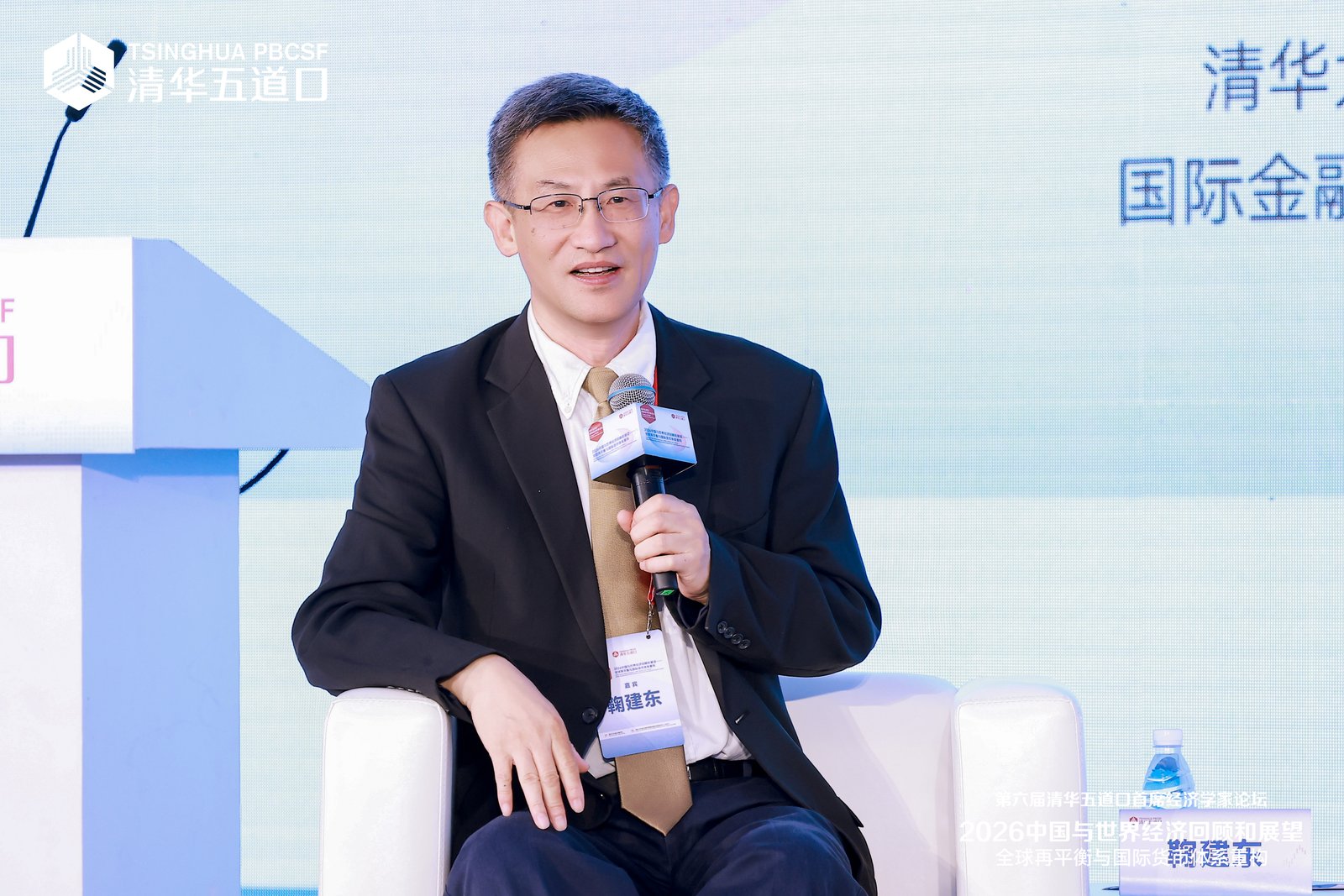
Ju analyzed current economic challenges from the perspectives of three structural imbalances: external structural tensions in the manufacturing sector, structural imbalances between domestic supply and demand, and structural fiscal imbalances.
He also proposed issuing RMB-denominated government bonds overseas as a policy instrument to advance this “triple rebalancing.”
The keynote speech was followed by four roundtable discussions focusing on four specific topics.
Roundtable I: Macroeconomic Policies and Global Rebalancing
The first roundtable was moderated by Ju Jiandong.
Justin Yifu Lin, Boya Chair Professor at Peking University and Dean of the Institute of New Structural Economics; Yu Yongding, Member of the Chinese Academy of Social Sciences; Yao Yang, Professor and Dean of the Dishui Lake Advanced Finance Institute at Shanghai University of Finance and Economics; and Li Xunlei, Chief Economist of Zhongtai International, held in-depth discussions on the causes and evolution of global economic imbalances, the competitiveness and production capacity of China’s manufacturing sector, the relationship between expanding domestic demand and balancing investment and consumption, the fiscal structure of central and local governments, the resolution of local government debt, and RMB internationalization.
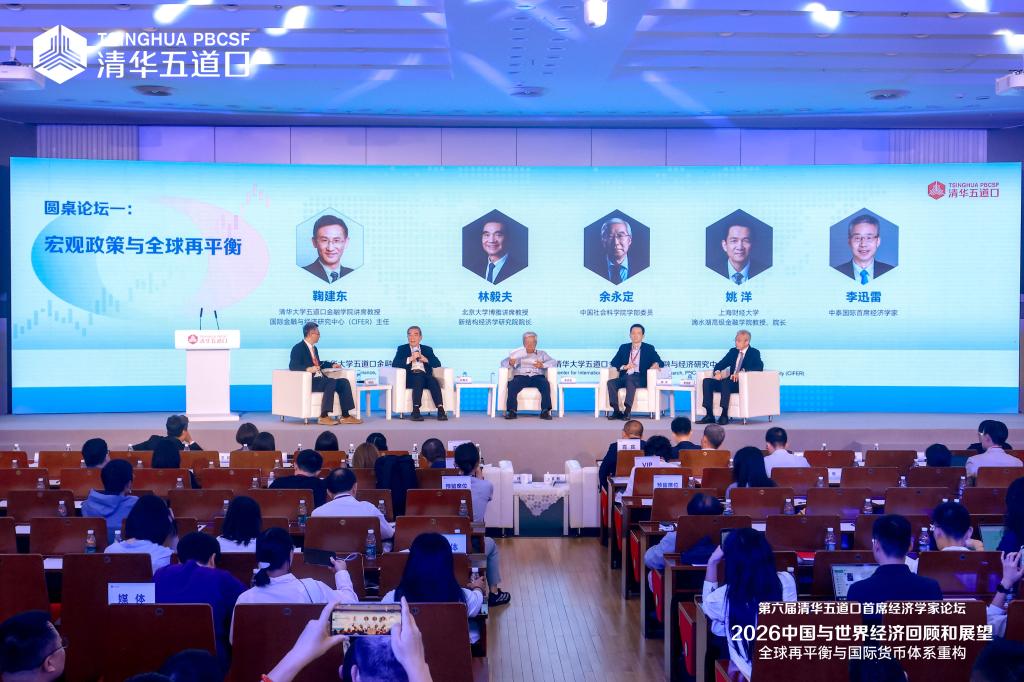
The participants noted that global imbalances are related not only to the international division of labor, slower global economic growth, and geopolitical changes, but also to the domestic economic structures of individual countries.
Roundtable II: The Chinese Economy and Global Rebalancing
The second roundtable was moderated by Zhang Bin, Research Fellow and Deputy Director of the Institute of World Economics and Politics at the Chinese Academy of Social Sciences.
Liu Yuanchun, President and Deputy Party Secretary of Shanghai University of Finance and Economics; Lu Ting, Chief China Economist at Nomura; Xing Ziqiang, Chief China Economist at Morgan Stanley; and Wang Tao, Senior Research Advisor at UBS Investment Bank, held in-depth discussions on the causes and evolution of current global economic imbalances, the relationship between insufficient domestic demand in China and its external surpluses, the adjustment of the real estate sector and the impact of its existing stock, artificial intelligence and the new round of technological revolution, as well as rebalancing through fiscal policy, social security, and the expansion of domestic demand.
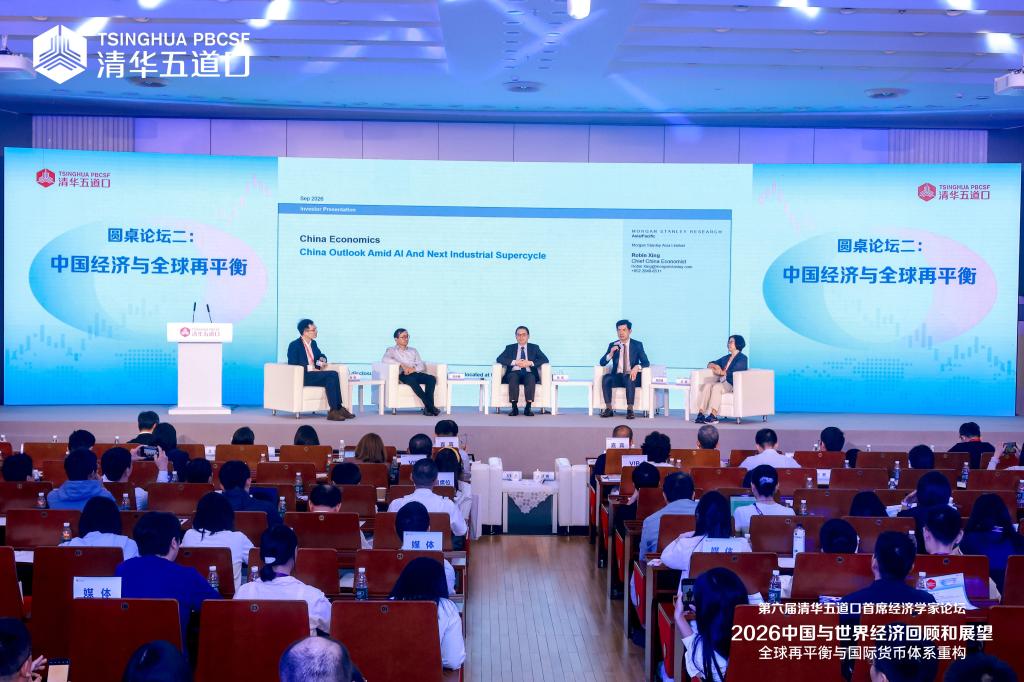
Participants observed that global imbalances remain in a process of evolution and that the internal rebalancing of the Chinese economy still needs to be advanced on a sustained basis.
China should further expand domestic demand, improve its social security system, and address existing risks so as to strengthen the resilience and sustainability of economic development.
Roundtable Ⅲ: Reshaping the International Monetary System and Global Rebalancing
The third roundtable was moderated by Qian Jun, Professor and Executive Dean of the Fanhai International School of Finance at Fudan University.
Zhu Min, former Deputy Managing Director of the International Monetary Fund (IMF); Miao Yanliang, Senior Managing Director and Chief Economist at China International Capital Corporation (CICC); Zhu Haibin, Executive Director of the Hong Kong Monetary Authority; and Guan Tao, Chief Economist of Huafu Securities, held in-depth discussions on opportunities for RMB internationalization, the role of offshore markets, digital currencies, intelligent payment systems, and related issues.
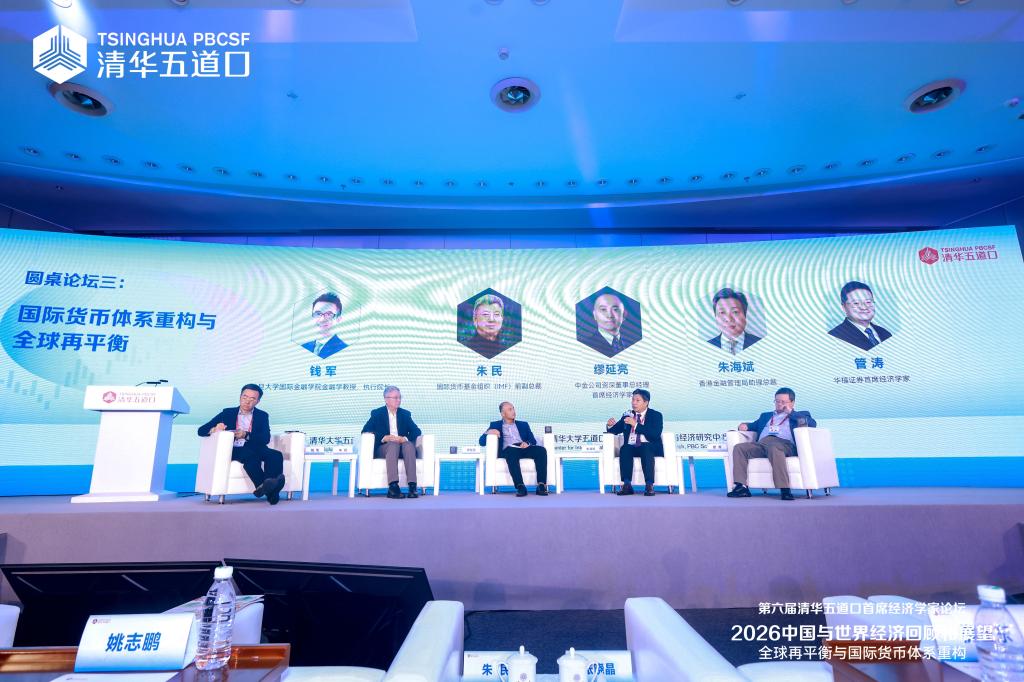
Participants noted that advancing RMB internationalization requires a solid foundation in both the real economy and capital markets, as well as greater investability and international attractiveness of RMB-denominated assets.
At the same time, China needs to balance financial opening-up with risk prevention and make greater use of the digital RMB and new cross-border payment infrastructure to provide more options for the diversification of the international monetary system.
Roundtable IV: Domestic Rebalancing and Global Rebalancing
The fourth roundtable was moderated by Shi Kang, Chair Professor at Tsinghua PBCSF and Director of the Center for International Macroeconomic Policy Research.
Huang Yiping, Boya Distinguished Professor at Peking University and Dean of the National School of Development; Zhang Xiaojing, Research Fellow at the Institute of Finance and Banking of the Chinese Academy of Social Sciences and Director of the National Institution for Finance and Development; and Wu Ge, Chief Economist and Assistant to the President of Changjiang Securities, discussed and offered their interpretations of issues including China’s national balance sheet and monetary policy.
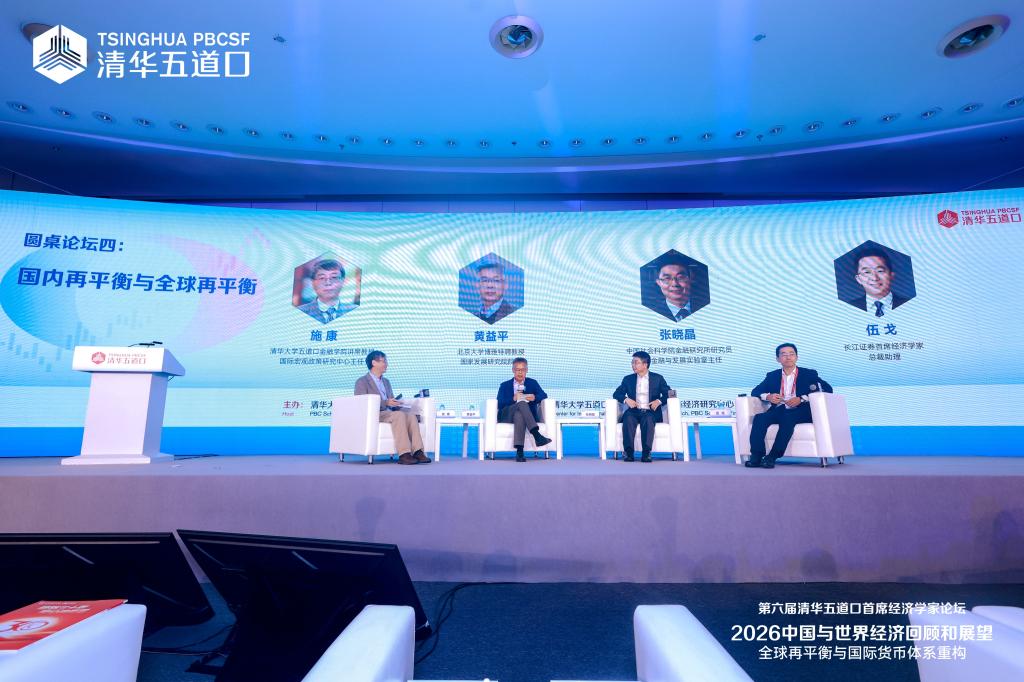
Participants suggested appropriately increasing the leverage ratio of the central government and adopting more pragmatic macroeconomic policies with tangible effects.
Closing
The one-day 2026 Tsinghua PBCSF Chief Economists Forum concluded successfully, attracting more than 3 million online viewers across various platforms.
The Forum received extensive coverage and livestreaming support from leading media outlets, including Sina Finance, China Securities Journal, Securities Times, National Business Daily, BRTV’s World Finance, Tencent Finance, NetEase Finance, Phoenix Finance, Guancha.cn, China High-Tech Industry Herald, China Economic Media Think Tank, Blue Whale Finance, Caijing.com.cn, Business Management Review, Dahe Fortune Cube, Xueshuo, Investor, Investment Frontier, Grand Canal Communication, China Finance and Economics, Xiang Shuai’s Financial World, and XWBank, among others.